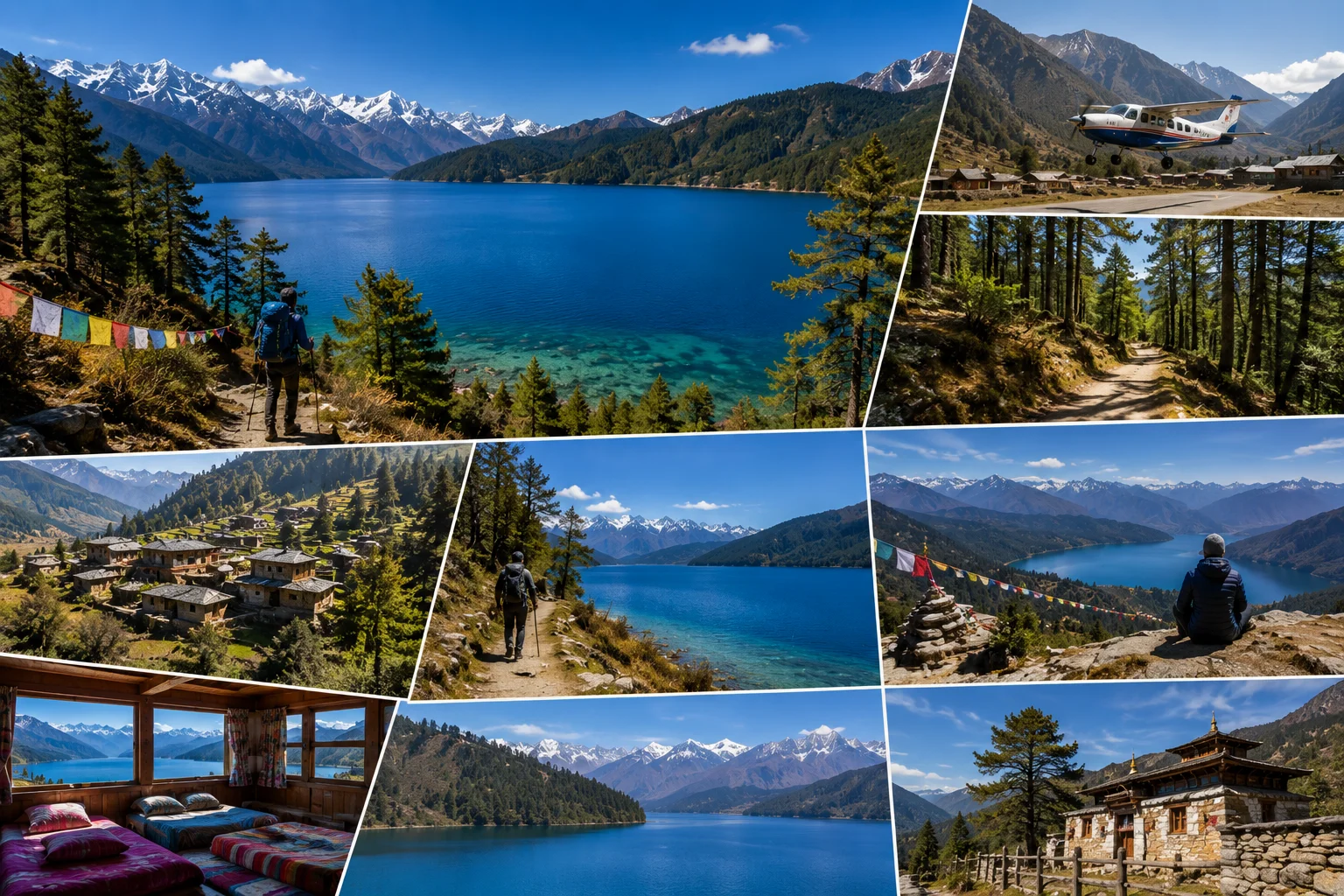
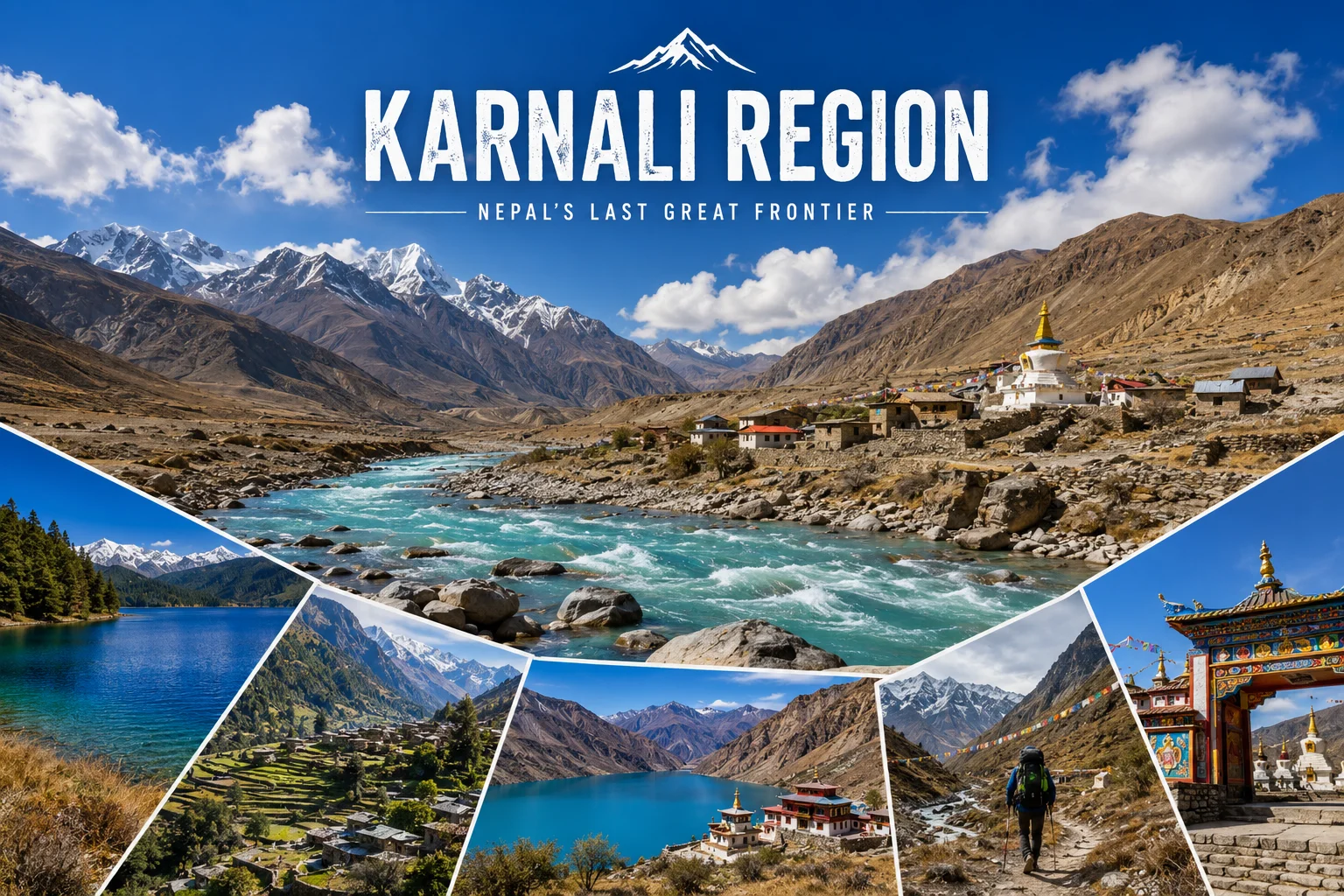
Karnali is the biggest province in Nepal and the one with fewest people visiting. It covers ten districts in the far northwest, from Rara Lake to the Tibetan border, and most of it has no road at all. If you want to see Nepal the way it looked before trekking became an industry, this is where you go.
Why Karnali is different
Everest and Annapurna get the crowds because flights and roads made them easy to reach. Karnali never got that. Most districts here are still reached by a single small plane a day, or by walking in. That kept the region poor and hard to travel, but it also kept the culture, the trails and the villages exactly as they were. You will not queue for a teahouse room here. Some days you will not see another trekker at all.
The land itself is different too. Karnali sits in the rain shadow of the high Himalaya, so parts of Dolpo and upper Mugu are dry, high desert countries that look closer to Tibet than to the green hills most people picture when they think of Nepal.
The province takes its name from the Karnali River, the longest river in Nepal, which starts near Mount Kailash in Tibet and cuts through the region on its way south.
What's here
Rara Lake Nepal's biggest lake, sitting at 2,990m inside Rara National Park in Mugu district. Reached by a short flight to Talcha or a longer walk in from Jumla. The easiest way into Karnali if you want a shorter trip. See the full Rara Lake trek guide.
Sinja Valley The old capital of the Khasa Malla kingdom and, by most accounts, the place where the Nepali language began. Usually combined with the walk-in route to Rara Lake, but worth knowing about on its own if you care about history as much as mountains.
Upper Dolpo The most famous name in the region, made known worldwide by Peter Matthiessen's book The Snow Leopard and Eric Valli's film Caravan. Centres on Shey Phoksundo Lake and the 11th-century Shey Gompa, inside Shey Phoksundo National Park, the largest national park in Nepal. This is a restricted area. You need a special permit and a minimum of two people in your group to trek here.
Lower Dolpo A shorter route into the same Shey Phoksundo Lake country, without the high passes or the restricted-area permit that Upper Dolpo needs. A good option if Upper Dolpo's length or permit rules do not work for your trip.
Humla and Limi Valley The most remote district in Nepal, and the usual overland route toward Mount Kailash in Tibet. Strong Tibetan Buddhist culture, old monasteries, and almost no tourist infrastructure. Not a trek to take lightly, but one of the last genuinely untouched valleys in the Himalaya.
Karnali River The river that gives the province its name is also one of the best whitewater rivers in Nepal, with rafting and kayaking trips running through its middle stretch outside the trekking season.
Getting there
There is no direct road into most of Karnali from Kathmandu. Almost every route starts with a flight to Nepalgunj, then a second small flight into the district you are heading to: Talcha for Rara, Juphal for Dolpo, Simikot for Humla. These flights are weather dependent and can be delayed, so build flexibility into your travel plans rather than a tight schedule.
A road does exist through Surkhet and on to Jumla, and slowly being extended further, but it is long, rough in places, and not something to rely on if your time is limited.
Best time to visit
Spring, from March to May, and autumn, from September to November, give the clearest skies and the most reliable flights across the whole region. Winter closes high passes and can ground flights for days. The far northern parts of Dolpo and Mugu, sitting in the rain shadow, are drier through the monsoon than most of Nepal, which is why some trekkers choose Karnali specifically for a June to August trip.
Is Karnali safe to visit
Yes. The trails are used by local guides every season and the routes themselves carry no more risk than any other remote Himalayan trek. The real planning points are logistics, not danger: flights that depend on weather, permits that need to be arranged in advance for restricted areas like Upper Dolpo, and villages with limited facilities once you are a few days' walk from the airstrip. A guide who knows the region handles all of this for you.