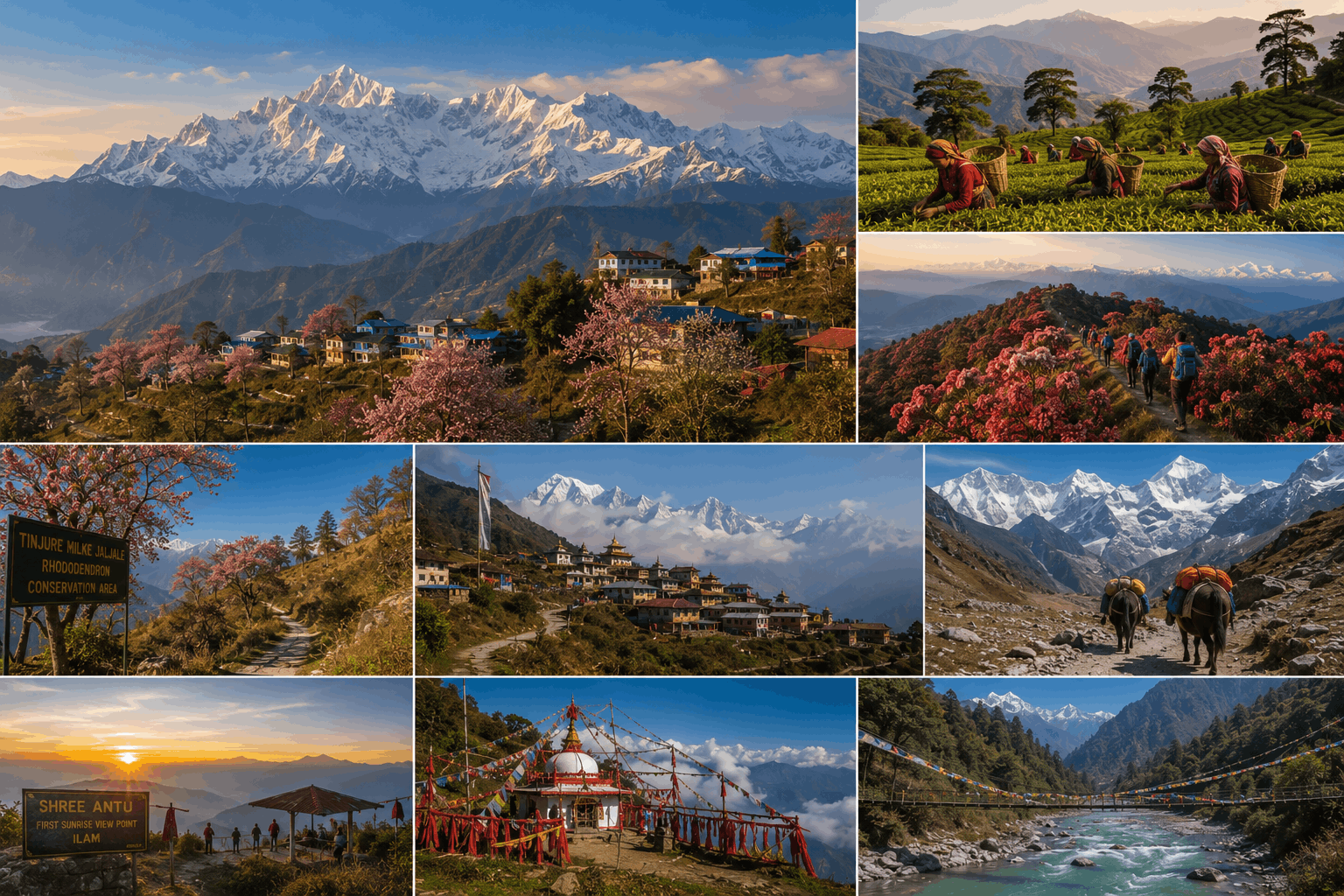
Eastern part of Nepal starts from the low-lying tea gardens of Ilam and Jhapa to the snow-capped summit of Kanchenjunga, which stands at an elevation of 8,586 metres, the second tallest peak in Nepal and the third tallest in the world at the northeast part of the country where Tibet meets India's Sikkim. The one common feature between the two ends is that they have a smaller number of tourists compared to the Everest and Annapurna circuits.
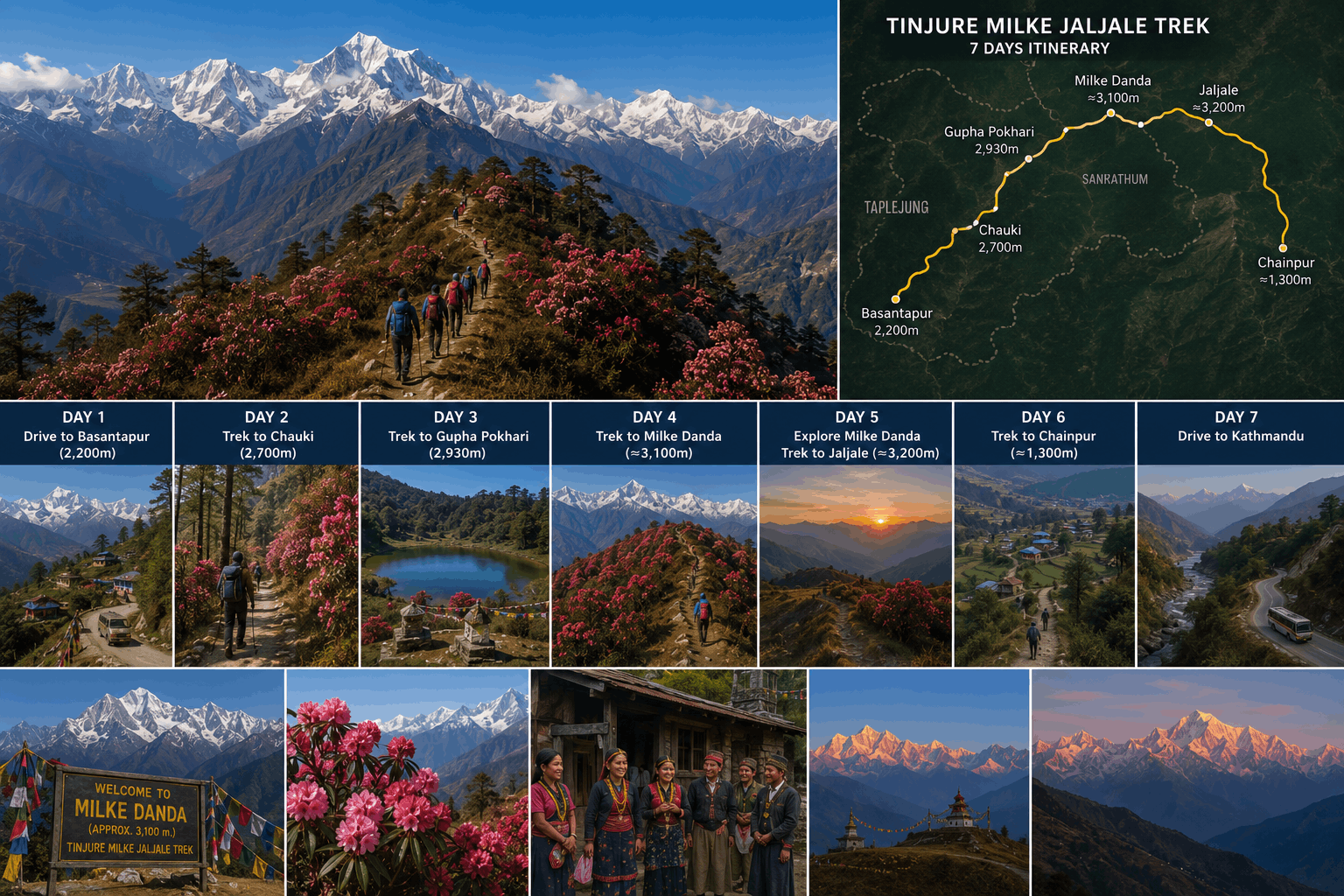
The most centrally located ridge in the region, both in terms of actual location and symbolism, is that of the Tinjure Milke Jaljale (TMJ) corridor, a 30 km long ridge passing through Tehrathum, Sankhuwasabha, and Taplejung districts, officially named Nepal's Rhododendron Conservation Area since 1998. It is on the TMJ ridge that 28 to 30 out of 32 Nepal rhododendron species can be found in an uninterrupted chain, thus receiving the title of Nepal's rhododendron capital. It is a trail from Basantapur (2,200m) through Chauki, Gupha Pokhari, Milke Danda (3,124m) and Jaljale Danda to Tumlingtar. The TMJ ridge lies as a natural link between Makalu Barun National Park to the west and the Kanchenjunga Conservation Area to the east, making it possible for all three mountains (Everest, Makalu and Kanchenjunga) to be seen from the same ridge line at once. TMJ trek is a camping trek without tea house support, while rhododendron blooming takes place from mid-April to the beginning of May.
Moving further north, Taplejung serves as an entrance to the Kanchenjunga Circuit, one of the most challenging but also most worthwhile multi-week trekking routes, which includes the North Base Camp of Pang Pema (5,143m) as well as the South Base Camp of Yalung Glacier (4,730m). The entire circuit route is approximately 200 kilometres long and follows the valley of the river Tamor, which passes through Limbu and Sherpa villages, rhododendron forests, and high altitude glacial terrain that receives only several hundred trekkers annually. In Taplejung town itself, the monastery of Olangchungola village claims to have continuous burning of butter lamps for more than 400 years now. The holy temple of Pathibhara Devi Temple, located at approximately 3,794 metres above Taplejung, attracts pilgrims from Nepal and India and is particularly important for both Hindus and Kirats. Necessary permits for Kanchenjunga region include the Kanchenjunga Conservation Area Permit (KCAP) and Restricted Area Permit; no independent trekking is allowed in this region.
Those looking for something more challenging can try the Lumba Sumba Pass Trek, which links the Kanchenjunga area with Makalu through the Great Himalayan Trail, one of the most remote treks in Nepal of a multi-week duration, completed only as a camping trek. The Makalu Base Camp trek in the Sankhuwasabha district is a completely different adventure, accessed through the Makalu Barun National Park with its wild atmosphere that trekking circuits don't offer.
The starting point of most eastern Nepal treks is Bhadrapur (Chandragadhi Airport, Jhapa), located a 45-minute flight from Kathmandu. The journey continues along the road leading north towards Taplejung through Kanyam and Ilam, which is the major tea-producing district in Nepal. Here, the hillsides are covered with terraced gardens, and Shree Antu is known as one of the first spots to see the sunrise in Nepal, with the Kanchenjunga peaks visible early in the morning.
Best time to visit: The best time to visit is between March and May to see the blooming of TMJ rhododendrons and clear weather before monsoon; while from September to November is suitable after monsoon due to good visibility and safe trekking condition along all treks in high altitude.